Roots of the Arab Spring:
NEH Summer Institute for School Teachers
July 15 – August 2, 2013
A three-week institute for thirty school teachers on the historical roots of what has come to be called the “Arab Spring.”
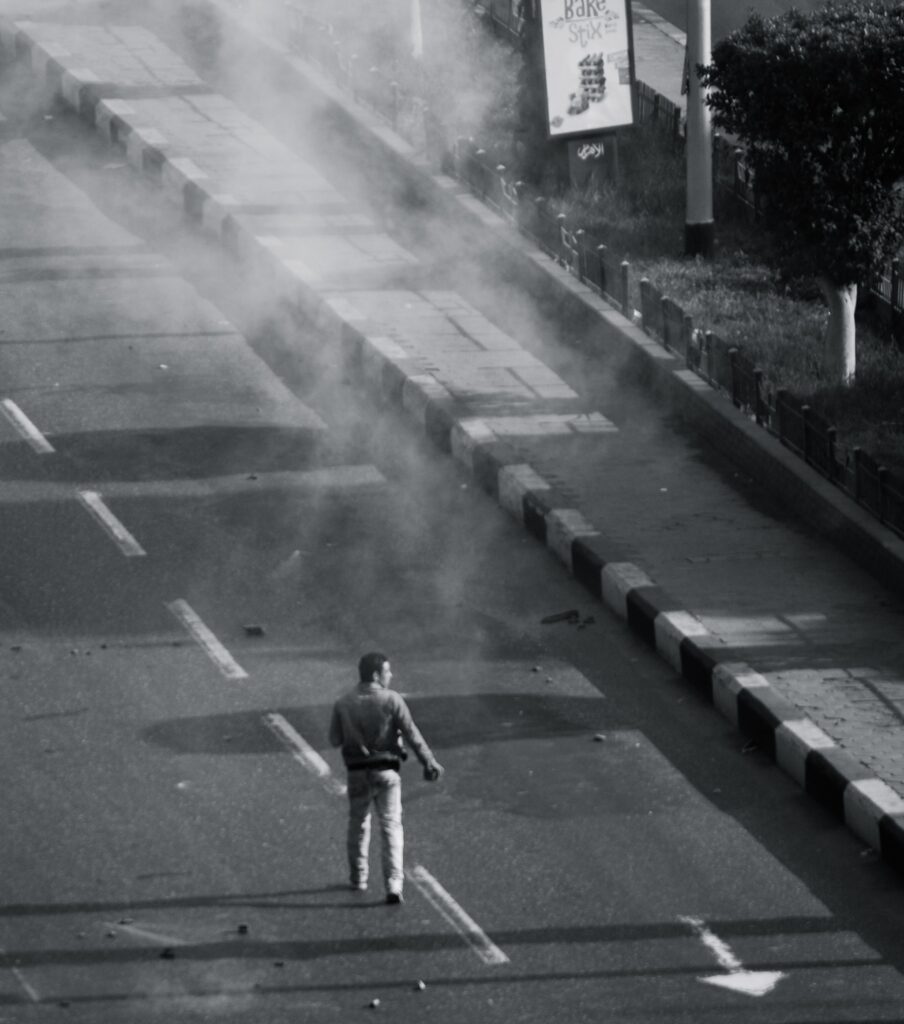
The University of California, Davis History Project received a grant of $185,000 from the National Endowment for Humanities to support a 3-week Summer Institute for School Teachers in 2013: Roots of the Arab Spring: Understanding the Historical Context for the Arab Uprisings. Omnia El Shakry led a team of scholars to guide 30 teachers through a study of the historical roots of the Arab Spring within the context of Modern Middle East history. Utilizing the Arab Spring as a unique prism through which to understand historical and contemporary forces shaping the modern Middle East, participants were able to grasp the world historical significance of the revolutions in Egypt, Tunisia, and Syria within the larger context of modern revolutions and uprisings against entrenched regimes. K-12 educators acquired new content knowledge, resources for lesson planning, and tools for using this knowledge to speak about democracy and the nature of civic participation at home and abroad, thereby bridging cultures and societies.
Image: Mariam Soliman
Schedule
Week 1
Theme: Colonialism, Anti-Colonial Nationalism, and Decolonization
Day 1, Monday July 15: Summer Institute Overview
9:00 – 9:30 Welcome and Orientation to Institute, Omnia El Shakry and Pamela Tindall
9:30 – 12:00 Conceptual Overview, Orientalism and the Study of the Middle East, El Shakry
Film and Discussion: Edward Said: On Orientalism (dir. Sut Jhally, 40 minutes)
Art Clip and Discussion: Mona Hatoum
Questions for Discussion:
- What is Orientalism?
- What is its repertory?
- What is its founding moment in the modern era?
- What is the significance of the Napoleonic invasion of Egypt?
- What is the Ottoman context of 19th century Egypt?
Required Advance Readings
- William L. Cleveland, A History of the Modern Middle East, ch. 5-7.
- Kenneth Perkins, A History of Modern Tunisia, ch. 1-2.
- Edward Said, Orientalism, pp. 1-28.
- Akram Khater, Sources in the History of the Modern Middle East, pp. 29-35.
12:00-1:30 Lunch and Networking
1:30–3:00 Introduce and Begin Participation Activities (Tumblr) & Final Project, History Project Team (HP)
Day 2, Tuesday July 16: Colonialism and Anti-Colonial Nationalism
9:00 – 11:00 Weekly Thematic Overview, Colonialism and Anti-Colonial Nationalism, El Shakry
Questions for Discussion
- How and when did the European powers colonize North Africa and the Middle East in the nineteenth and early
twentieth centuries? - What were the main characteristics and consequences of colonialism?
- What were indigenous peoples’ responses to European colonialism
- How did colonialism and capitalism influence the formation of modernity and the circulation of political ideas in
the region? - What types of class relations, between elites and non-elites, rulers and ruled, were forged and under what
conditions? - What is anti-colonial nationalism?
- What different types of nationalism emerged in Egypt and the Arab world?
11:00 – 11:30 Library tour
11:30 – 1:00 Lunch
1:00– 3:00 Primary Source Readings and Exercises, El Shakry and HP
Daily Assigned Readings:
- Cleveland, ch. 9, 11-12.
- Perkins, A History of Modern Tunisia, ch. 3-4.
- Albert Memmi, The Colonizer and the Colonized, pp. 1-18, 77-89.
- Elizabeth Thompson, Colonial Citizens: Republican Rights, Paternal Privilege, and Gender in French Syria and Lebanon, pp. 71-126.
- Khater, pp. 66-83, 91-108, 162-181.
- Anouar Abdel-Malek ed. Contemporary Arab Political Thought pp. 45-47, 88-96, 112-114.
Recommended Readings:
- Christoph Schumann, “The Generation of Broad Expectations: Nationalism, Education, and Autobiography in Syria and Lebanon, 1930-1958,” Die Welt des Islams, 41: 2 (Jul., 2001), 174-205.
Readings for Day 2 will introduce participants to colonialism and anti-colonial nationalism in Egypt, Tunisia, Syria and the broader Middle East. Cleveland’s textbook will provide the historical background from World War I and the end of the Ottoman order up through 1945. Primary source readings are carefully selected to include writings from both dominant and marginalized perspectives including: Egyptian nationalists (Taha Husayn, Ahmad Lutfi al-Sayyid); feminists (Qasim Amin, Bahithat al-Badiya); pan-Arabists (Michel Aflaq); Syrian nationalists (Antun Sa’adeh); and Islamists (Hasan al-Banna). Albert Memmi’s text is a poetic meditation by a Tunisian Jew on the fraught nature of the relationship between colonizer and colonized. Recommended readings provide additional background on Syria.
Day 3, Wednesday July 17
9:00 – 11:30 Cultural Politics of Nationalism, El Shakry
Art Clip: Mahmud Mukhtar
Questions for Discussion
- What are the cultural politics of nationalism?
- How was the cultural specificity of national identity conceptualized (Pharaonism, Arabism, and Islamism)?
- What role did literary figures play in the development of nationalism?
- What role did music, art, and other cultural forms play in Arab nationalism, pan-Arabism, and Nasserism?
11:00 – 11:30 Library tour
11:30 – 1:00 Lunch
1:00– 3:00 Continuation of Morning Session, El Shakry with HP
Film and Discussion–Umm Kulthum: A Voice like Egypt (dir. Michal Goldman, 67 minutes)
Daily Assigned Readings:
- Ahmad Lutfi Al-Sayyid “Egyptianness”; Taha Husayn, “The Future of Culture in Egypt”; Hassan al-Banna, “The New Renaissance,” in John Donohue and John L. Esposito, eds. Islam in Transition: Muslim Perspectives.
- Elliott Colla, “The Discovery of Tutankhamen’s Tomb,” in Conflicted Antiquities, Egyptology, Egyptomania, and Egyptian Modernity, pp. 172-233.
- Tawfiq al-Hakim, “Diary of a Country Prosecutor” (Selections) in The Essential Tawfiq al-Hakim, pp. 201-210.
- Naguib Mahfouz, “Palace Walk” and “The Thief and the Dogs” (Selections) in The Essential Naguib Mahfouz, pp. 59-91; 142-146.
Recommended Readings:
- Samah Selim, The Novel and the Rural Imaginary in Egypt, 1880-1985.
Readings for Day 3 will introduce participants to the cultural politics of nationalism in Egypt. We will focus on the competing national ideologies of Pharaonism, Arabism, and Islamism. Through a careful reading of fiction, by Nobel laureate Naguib Mahfouz and Tawfiq al-Hakim, and sculpture by Mahmud Mukhtar, we will explore how art and literature contributed to the development of nationalism, while at the same time expressing ambivalence towards the exclusions embodied in nationalism and the nation-state project. The film Umm Kulthum: A Voice like Egypt, which interweaves the history of twentieth century Egypt with Umm Kulthum’s biography, will give participants a visual and acoustic sense of the cultural contours of nationalism. Recommended readings provide additional background on the relation between literature and nationalism and the ambivalent figure of the fellah or peasant.
Day 4, Thursday July 18
9:00 – 11:30 Decolonization, El Shakry
Art clip and Discussion: ‘Abd al-Hadi al-Gazzar
Questions for Discussion
- What was Egypt’s 1952 revolution? Was it a revolution or a military coup?
- Who was Gamal Abdel Nasser and what was his significance to Egypt and to the Arab world?
- What were the significance of cold war politics, the politics of non-alignment, and Third World Solidarity movements to decolonization in the Middle East?
11:30 – 12:30 Lunch
12:30– 3:00 Continuation of Morning Session, El Shakry with HP
Film and Discussion – Nasser ’56 (dir. Muhammad Fadil, 142 minutes)
Daily Assigned Readings:
- Cleveland, ch. 15.
- Omnia El Shakry, “Etatism: Theorizing Egypt’s 1952 Revolution” in The Great Social Laboratory.
- Gamal Abdel-Nasser, “Speech delivered at Port Said on 23 December 1961,” in James Gelvin, The Middle East: A History, 307-308.
- The Suez Canal, Selected Documents, from Barbara Harlow and Mia Carter (eds.) Archives of Empire, Volume I: From the East India Company to the Suez Canal, pp. 555-66; 575-79; 611-13; 619-24.
Recommended Readings:
- Cleveland, ch. 16.
- Perkins, A History of Modern Tunisia, ch. 5.
Readings for Day 4 will introduce participants to Egypt’s 1952 military coup and revolution and to Egypt’s Gamal ‘Abdel Nasser, a towering figure of anti-colonial nationalism and the politics of non-alignment during the cold war. Cleveland’s textbook will provide the historical background of the main developments in Egypt under Nasser. Primary source readings will focus on the building, opening, and consequences of the Suez Canal, providing much needed background to Nasser’s nationalization of the canal in 1956. We will briefly explore the artistic works of ‘Abd al-Hadi al-Gazzar which traverse both the early exuberance of anticolonial nationalism and a later pessimism towards the Nasserist project. The film Nasser ’56 narrates the events of the 1956 Suez Canal crisis and the ensuing tripartite attack. Recommended readings provide additional background on developments in the wider Arab world, including Tunisia and Syria, during the Nasser period.
Day 5, Friday July 19
9:00 – 10:00 Library Orientation
10:15 AM – 11:45 AM UC Davis Campus Tour
Afternoon Work time for Summer Scholars/Project Instruction
- Portfolios, Projects, Product Options
- Reading
- Library Research
- Portfolio or Project Development with coaching & advising
Week 2
Theme: Postcolonialism and Neoliberalism
Day 6, Monday July 22
9:00 – 11:00 Weekly Thematic Overview, Postcolonialism and Neoliberalism, El Shakry
Art Clip and Discussion: Oraib Toukan
Questions for Discussion:
- What are the central challenges of the postcolonial period?
- What is neoliberalism?
- How did the specific policies of neoliberalism affect Egypt’s political structures and economic development?
- How did the specific policies of neoliberalism affect Tunisia’s political structures and economic development?
- What is the lived experience of neo-liberalism?
11:00 – 12:30 Lunch
12:30 – 3:00 The Political Economy of Neoliberalism, El Shakry with HP
Film and Discussion: The Closed Doors (dir. Atef Hetata, 110 minutes)
Daily Assigned Readings
- Clement Moore Henry and Robert Springborg, Globalization and the Politics of Development in the Modern Middle East, ch. 5.
- Timothy Mitchell, “The Object of Development” in The Rule of Experts, ch. 7.
Recommended Readings
- Henry and Springborg, ch. 4.
- Asef Bayat, Life as Politics: How Ordinary People Change the Middle East.
Readings for Day 6 will introduce participants to neo-liberalism in Egypt and Tunisia. Henry and Springborg compare and contrast Egypt and Tunisia as examples of bully praetorian states, while Mitchell discusses the economic development industry in Egypt and its relationship to food security and income distribution. Recommended readings provide comparative reference to what Henry and Springborg refer to as “bunker” states, which include Syria and Yemen. Bayat details the lived experience of neo-liberalism by describing the survival strategies and struggles of Cairo’s poor.
Day 7, Tuesday July 23
9:30 – 11:30 The Rise of Political Islam, Flagg Miller
Questions for Discussion
- What is political Islam?
- What are the sociological, religious, and economic explanations for political Islam?
- What are key historical examples of Islamist movements and figures in Egypt and the Middle East?
11:00 – 1:00 Lunch
1:00– 3:00 Continuation of Morning Session, Flagg Miller with HP
Film and Discussion: The Women of Hizbollah (dir. Mahir Abi-Samra, 49 minutes)rimary Source Readings and Exercises, El Shakry and HP
Daily Assigned Readings:
- Yahya Sadowski, “Political Islam: Asking the Wrong Questions?” Annual Review of Political Science, 9 (2006): 215-40.
- Timothy Mitchell, “McJihad: Islam in the U.S. Global Order,” Social Text 20, no. 4 (2002): 1-18.
- Roxanne Euben, “Killing (for) Politics: Jihad, Martyrdom and Political Action.” Political Theory 30, no. 1 (2002): 4-35.
Recommended Readings:
- John Donohue and John L. Esposito, eds. Islam in Transition: Muslim Perspectives.
- Mona El-Ghobashy, “The Metamorphosis of the Muslim Brothers.”
Readings for Day 7 will introduce participants to political Islam. Yahya Sadwoski’s article provides a useful overview of the literature on Political Islam, while Mitchell explores the role of Islam in the U.S. global order. Finally, Roxanne Euben explores the politics of jihad and martyrdom. We will screen the film The Women of Hizbollah. Recommended readings provide primary source selections, while El-Ghobashy’s article provides key historical context for Egypt’s Muslim Brotherhood and chronicles their ideological and organizational shifts, while presenting various interpretations for their popularity and significance.
3:00-3:30 Meeting with NEH Program Officer
Day 8, Wednesday, July 24
9:00 – 11:30 Cultures of Dissent, Noha Radwan
Questions for Discussion
- How has political repression and coercion been experienced in Egypt and Syria?
- What types of literary, artistic, and political responses emerged in opposition to political repression?
- What can we learn from the numerous artistic examples of dissent since the 1970s?
11:30 – 1:00 Lunch
1:00– 3:00 Workshop – Analyzing Primary Sources, Noha Radwan with HP
Daily Assigned Readings:
- Sonallah Ibrahim, The Committee
- Noha Radwan, “The Place of Fiction in the Historical Archive,” Critique: Critical Middle Eastern Studies 17 (2008).
- Nizar Qabbani, Selected Poems
- 6. Bread, Hashish and Moon
- 7. Clarification to my poetry readers
- 12. I conquer the world with words
- 16. Language
- 34. We are accused of terrorism
Recommended Readings:
- Ibrahim ‘Abd al-Majid, House of Jasmine
Readings for Day 8 explore the bleak political climate of repression and coercion in Egypt since the 1970s, while at the same time demonstrating the possibility of artistic creation in the face of oppression. We will read prominent Egyptian novelist and intellectual Sonallah Ibrahim’s renowned 1981 novel, The Committee, which was originally banned in Egypt, because of its a searing commentary on political repression in the context of a global capitalism run amok. We will also read Noha Radwan’s commentary on Ibrahim’s novel as well as that of the recommended novel by Ibrahim ‘Abd al-Majid, House of Jasmine, which serves as a prologue to the Egyptian revolution of 2011.
Day 9, Thursday, July 25
9:00 – 11:30 Gender and Nationalism, Suad Joseph
Questions for Discussion
- What social conditions did Arab women face during the nationalist period?
- What is Arab feminism? What is its relationship to Islamism?
- How did the conditions facing Arab women affect struggles between feminists, the state, and patriarchal structures within society, especially in Egypt and Tunisia?
11:30 – 1:00 Lunch
1:00 – 3:00 Continuation of Morning Session, Joseph with HP
Film and Discussion – Four Women of Egypt (dir. Tahani Rached, 90 minutes)
Daily Assigned Readings:
- Suad Joseph, “Introduction,” in S. Joseph ed. Gender and Citizenship in the Middle East.
- Suad Joseph, “Women between Nation and State in Lebanon,” in Caren Kaplan et. al. Between Woman and Nation: Nationalisms, Transnational Feminisms, and the State, 162-181.
- Heba Raouf Ezzat, “On the Future of Women and Politics in the Arab World,” in Islam in Transition.
Recommended Readings:
- Zakia Salime, Between Feminism and Islamism: Human Rights and Shari’a Law in Morocco.
- Leila Ahmed, Women, Gender, and Islam, ch. 9-11.
- Mounira Charrad, “Policy Shifts: State, Islam, and Gender in Tunisia, 1930s-1990s”
Readings for Day 5 will introduce participants to gender and nationalism in the Arab world, especially in Egypt and Tunisia. Suad Joseph details the intricate interconnections between women, the nation-state, and citizenship in the Arab world, exploring the various ways in which women fall short of being vested with the rights and privileges that would define them as fully enfranchised citizens. Egyptian activist Heba Raouf Ezzat details the conceptual frameworks necessary for thinking about women’s political participation in the Arab world. Recommended readings provide additional background on twentieth century Egyptian and Tunisian gender history.
Day 10, Friday, July 26
9:00 – 11:30 Youth Culture and Neo-Liberalism, El Shakry
Questions for discussion
- What is the so-called youth bulge?
- What challenges do youth face in the Middle East?
- How have diverse youth cultures expressed themselves, socially, politically, and artistically?
11:30 – 1:00 Lunch
1:00 – 3:00 Continuation of Morning Session, El Shakry
Film and Discussion– The Microphone (dir. Ahmed Abdalla, 120 minutes)
Daily Assigned Readings
- The Politics of Youth, Middle East Research Report, Volume 37, no. 245
- Asef Bayat and Linda Herrera, “Introduction: Being Young and Muslim in Neoliberal Times,” In A. Bayat and L. Herrera eds., Being Young and Muslim: New Cultural Politics in the Global South and North.
- Asef Bayat, “Muslim Youth and the Claim of Youthfulness,” In Being Young and Muslim.
Recommended Readings
- Omnia El Shakry, “Youth as Peril and Promise: The Emergence of Adolescent Psychology in Postwar Egypt”
Week 3
Theme: The Revolutions
Day 11, Monday July 29:
9:00 – 9:30 Weekly Thematic Overview, The Arab Uprisings, El Shakry
Questions for Discussion
- What were the Arab Uprisings?
- What do these revolutions have in common? How do they differ?
- How can we examine these revolutions despite their ongoing and unfinished nature?
9:30 – 11:30 Egypt, El Shakry
Questions for Discussion
- What were the long term causes, immediate catalysts, events, social actors, and political agents of the revolution in Egypt?
- To what extent have the initial hopes and goals of the revolution been realized to-date?
- Have there been any unexpected events, delays, or unrealized goals?
11:30 – 1:00 Lunch
1:00 – 3:00 Continuation of Morning Session, El Shakry and HP
Film and Discussion– Tahrir 2011
Daily Assigned Readings
- Elliott Colla, “The Poetry of Revolt” in Dawn of the Arab Uprisings
- Paul Amar, “Why Mubarak is Out” in Dawn of the Arab Uprisings
- Omnia El Shakry, “Egypt’s Three Revolutions: The Force of History Behind this Popular Uprising” in Dawn of the Arab Uprisings.
- Saba Mahmood, “The Architects of the Egyptian Uprising” in Dawn of the Arab Uprisings.
- Constitutional Documents – protest demands, blogs, letters and images, ch. 7.
- http://www.tahrirdocuments.org/
Recommended Viewings
Readings for Day 11 focus on Egypt, providing historical background on Egypt’s three revolutions (1919, 1952, 2011) and attendant relations between rulers and ruled. Amar and Mahmood’s article details the complex and multi-layered state repressive apparatus that propped up Mubarak’s 30-year rule, as well as the social forces of resistance that emerged to combat it, while Colla explores the poetry of revolt. We will analyze primary source documents from the revolution collectively and watch the documentary Tahrir that recounts the tumultuous 18 days prior to Mubarak’s ouster in Tahrir square. The recommended viewing provides visual documents, testimonies and live footage during and after the 18 days of Mubarak’s ousting.
Day 12, Tuesday, July 30
9:00 – 11:30 Syria, Keith Watenpaugh
Questions for Discussion
- What were the long term causes, immediate catalysts, events, social actors, and political agents of the revolution in Syria?
- How is Syria a counter-example to Egypt and Tunisia?
- To what extent have the initial hopes and goals of the revolution been realized to-date?
- Have there been any unexpected events, delays, or unrealized goals?
11:30 – 1:00 Lunch
1:00– 3:00 Continuation of Morning Session, Keith Watenpaugh with HP
Film and Discussion– “Nights of the Jackal” (dir. AbdulLatif Abdulhamid, 104 minutes)
Daily Assigned Readings:
- Keith Watenpaugh, “Creating Phantoms: Zaki al-Arsuzi, The Alexandretta Crisis and the Formation of Modern Arab Nationalism in Syria,” in International Journal of Middle East Studies, 28 (1996), 363-389.
- Keith Watenpaugh, “Not Quite Syrians: Aleppo’s (Syria) Communities of Collaboration,” in Being Modern in the Middle East, 279-298.
- Samar Yazbek, A Woman in the Crossfire: Diaries of the Syrian Revolution, 1-80.
- “A Wasted Decade: Human Rights in Syria during Bashar al-Asad’s First Ten Years in Power” Human Rights Watch, (2010)
Recommended Readings:
- Keith Watenpaugh, “Aleppo Now and the Future of Armenians in Syria”
- http://www.youtube.com/watch?v=IYoCbAmOBzw
- http://alpha.syriadeeply.org/about/
Readings for Day 12 focus on Syria, with two essays by Watenpaugh, one that focus on the Alawite dimensions of the origins of Ba’athism and another on minority collaboration with colonialism. Together they address the complex relationship between colonialism, Ba’athism, and minorities in Syria. Samar Yazbek’s diary provides a first hand account of the first four months of the Syrian revolution. The recommended website provides additional footage and insight into the Syria uprising and its effect on the population.
Day 13, Wednesday, July 31:
9:00 – 11:30 Tunisia, Susan Miller
Questions for Discussion
- What were the long term causes, immediate catalysts, events, social actors, and political agents of the revolution in Tunisia?
- To what extent have the initial hopes and goals of the revolution been realized to-date?
- Have there been any unexpected events, delays, or unrealized goals?
11:30 – 1:00 Lunch
1:00 – 3:00 Continuation of Morning Session, Susan Miller with HP
Daily Assigned Readings:
- Perkins, A History of Modern Tunisia, ch. 6-7
- Amy Aisen Kallandar, “Tunisia’s Post Ben Ali Challenge: A Primer.”
- Bassam Haddad, et. al., “Section II: Tunisia” in The Dawn of the Arab Uprisings.
- “A New Turn for Tunisia” in New York Review of Books (July 11, 2013).
Recommended Readings:
- Jean Duvignaud, Change at Chebika.
Readings for Day 13 focus on Tunisia, providing historical background on events leading up to and including Ben-Ali’s one party rule, political repression, and the history of dissent. Participants will read selected speeches from Bourguiba. The recommended reading is a classic of modernization theory from the 1960s describing a village in Tunisia.
Day 14, Thursday, August 1
9:00 – 11:30 Reflecting on the Arab Spring, Omnia El Shakry, Susan Miller, Noha Radwan, and Keith Watenpaugh
Questions for Discussion
- What can we learn from the Arab uprisings? Can they be called revolutions?
- What are the conflicting interpretations of these events? What political struggles does the region continue to face two years later?
- To what extent have these revolutions actually transformed relations between rulers and ruled?
- What is left unrealized?
11:30 – 1:00 Lunch
1:00 – 3:00 Summer Scholar Project Presentations
Daily Assigned Readings:
- Haddad, et. al. Dawn of the Arab Uprisings, 1-46
Readings for Day 14 address some of the big questions about the uprising, such as: What can history tell us about “revolutionary waves?” When will we be able to judge the significance of the Arab uprisings? And what conclusions might we draw from the uprisings thus far?
Day 15: Friday, August 2
9:00 – 11:30 Summer Scholar Project Presentations
11:30 – 1:00 Lunch
1:00 – 2:00 Closing Remarks, Dr. El Shakry and Pamela Tindall
Questions for Discussion
- How does the exploration of the history and cultural contexts of Egypt, Tunisia, and Syria help us better understand the Arab Spring?
- How have the discussions, readings, participatory activities, and final project aided our understanding of this content?
2:00-3:00 Written and Oral Feedback